# Launch NavigationView
A complete turn-by-turn experience using the default NavigationLauncher
This example shows how to launch Navigation using `NavigationLauncher`
- How to fetch a route using `NBNavigation.fetchRoute` with origin and destination
- How to config `NavLauncherConfig` and launch Navigation using `NavigationLauncher` with the given route
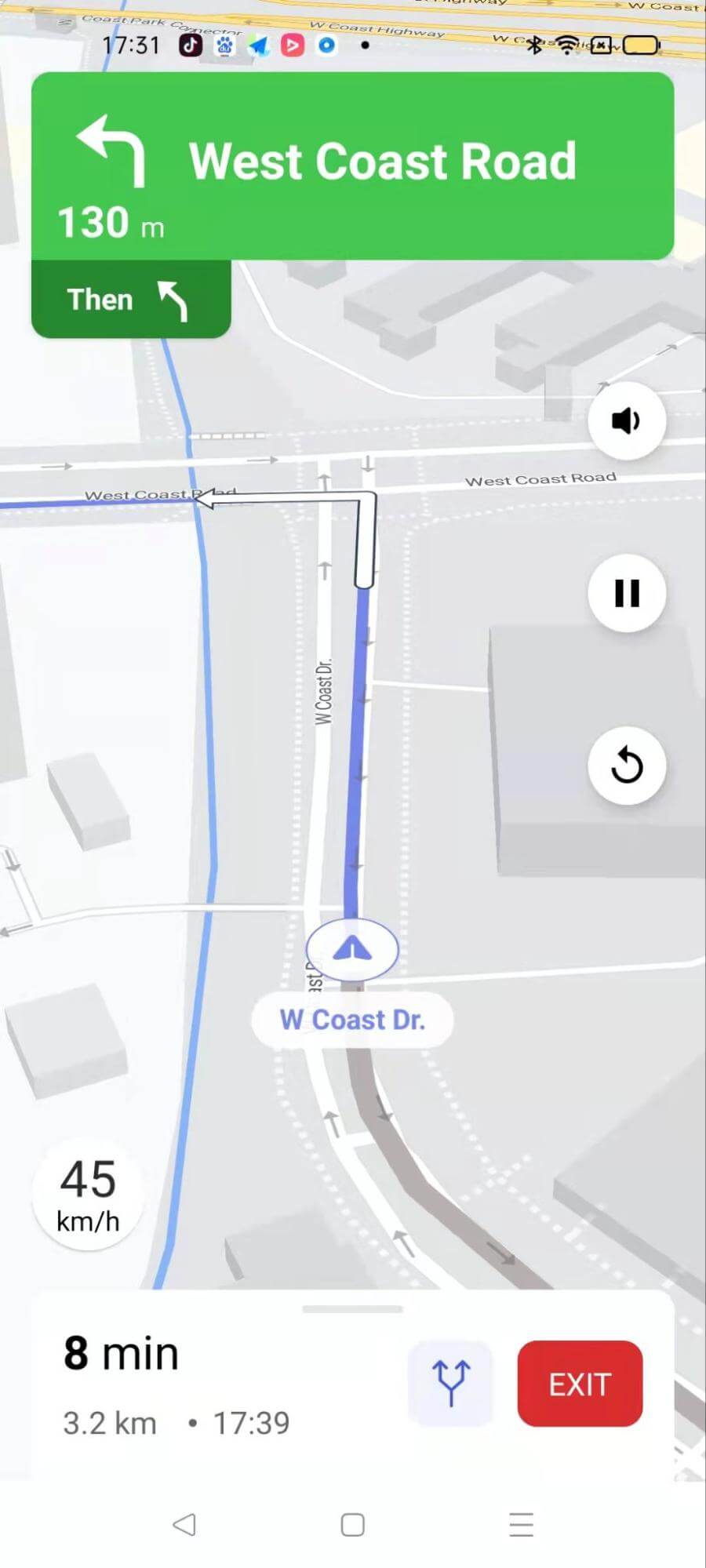
For all code examples, refer to [Navigation Code Examples](https://github.com/nextbillion-ai/nb-navigation-android-demo)
**activity_main.xml [view source](https://github.com/nextbillion-ai/nb-navigation-android-demo/blob/main/app/src/main/res/layout/activity_main.xml)**
```xml
```
**NavigationActivity view source**
```java
package ai.nextbillion.navigation.demo.activity;
import android.os.Bundle;
import android.view.View;
import android.widget.Button;
import android.widget.ProgressBar;
import android.widget.TextView;
import ai.nextbillion.kits.directions.models.DirectionsResponse;
import ai.nextbillion.kits.directions.models.DirectionsRoute;
import ai.nextbillion.kits.geojson.Point;
import ai.nextbillion.maps.location.modes.RenderMode;
import ai.nextbillion.navigation.demo.R;
import ai.nextbillion.navigation.ui.NBNavigation;
import ai.nextbillion.navigation.ui.NavLauncherConfig;
import ai.nextbillion.navigation.ui.NavigationLauncher;
import androidx.annotation.NonNull;
import androidx.appcompat.app.AppCompatActivity;
import retrofit2.Call;
import retrofit2.Callback;
import retrofit2.Response;
public class NavigationActivity extends AppCompatActivity implements View.OnClickListener {
private Button fetchRoute;
private Button startNav;
private TextView routeGeometry;
private DirectionsRoute directionsRoute;
private ProgressBar progress;
@Override
protected void onCreate(Bundle savedInstanceState) {
super.onCreate(savedInstanceState);
setContentView(R.layout.activity_main);
fetchRoute = findViewById(R.id.fetchRoute);
startNav = findViewById(R.id.startNav);
routeGeometry = findViewById(R.id.routeGeometry);
progress = findViewById(R.id.progress);
fetchRoute.setOnClickListener(this);
startNav.setOnClickListener(this);
startNav.setEnabled(false);
}
@Override
public void onClick(View view) {
if (view.getId() == R.id.fetchRoute) {
progress.setVisibility(View.VISIBLE);
Point origin = Point.fromLngLat(103.75986708439264, 1.312533169133601);
Point destination = Point.fromLngLat(103.77982271935586, 1.310473772283314);
NBNavigation.fetchRoute(origin, destination, new Callback() {
@Override
public void onResponse(@NonNull Call call, @NonNull Response response) {
progress.setVisibility(View.GONE);
//start navigation with the route we just fetched.
if (response.body() != null && !response.body().routes().isEmpty()) {
directionsRoute = response.body().routes().get(0);
routeGeometry.setText(String.format("Route Geometry: %s", directionsRoute.geometry()));
startNav.setEnabled(true);
}
}
@Override
public void onFailure(@NonNull Call call, @NonNull Throwable t) {
progress.setVisibility(View.GONE);
}
});
} else if (view.getId() == R.id.startNav) {
NavLauncherConfig.Builder configBuilder = NavLauncherConfig.builder(directionsRoute);
configBuilder.locationLayerRenderMode(RenderMode.GPS);
configBuilder.shouldSimulateRoute(true);
NavigationLauncher.startNavigation(NavigationActivity.this, configBuilder.build());
}
}
}
```
### Code Highlights
The example code represents a **NavigationActivity** class that allows users to fetch a route and start navigation using the **NavigationLauncher** class provided by the navigation SDK. Code Explanation The code example defines a layout file `activity_main.xml` that contains a vertical `LinearLayout` with two Button views (`fetchRoute` and `startNav`), a `TextView` (`routeGeometry`), and a `ProgressBar` (`progress`).
The associated Java class `NavigationActivity` extends `AppCompatActivity` and implements the `OnClickListener` interface. In the `onCreate` method, the layout elements are initialized and click listeners are set for the buttons.
When the `fetchRoute` button is clicked, a network request is made using the `NBNavigation` class to fetch a route between two geographic points (origin and destination). The response is received asynchronously in the `onResponse` callback. If the response is successful and contains at least one route, the first route is stored in the `directionsRoute` variable, and its geometry is displayed in the `routeGeometry` text view. The `startNav` button is enabled to allow navigation to be started.
When the `startNav` button is clicked, a `NavLauncherConfig` is created with the stored `directionsRoute` and some configuration options. The navigation is then started using the `NavigationLauncher.startNavigation` method.
### Code summary
- Fetch a route
- Using the `NBNavigation.fetchRoute` method to retrieve the directions response for the given **origin** and **destination** points. If the response is successful and it will contain at least one route
- Start navigation
- `NavLauncherConfig` object is created with the previously fetched route and additional configuration options such as location layer render mode and route simulation. The `NavigationLauncher.startNavigation` method is called to start the navigation activity with the provided configuration.